
Debt Consolidation with House Refinancing in Malaysia

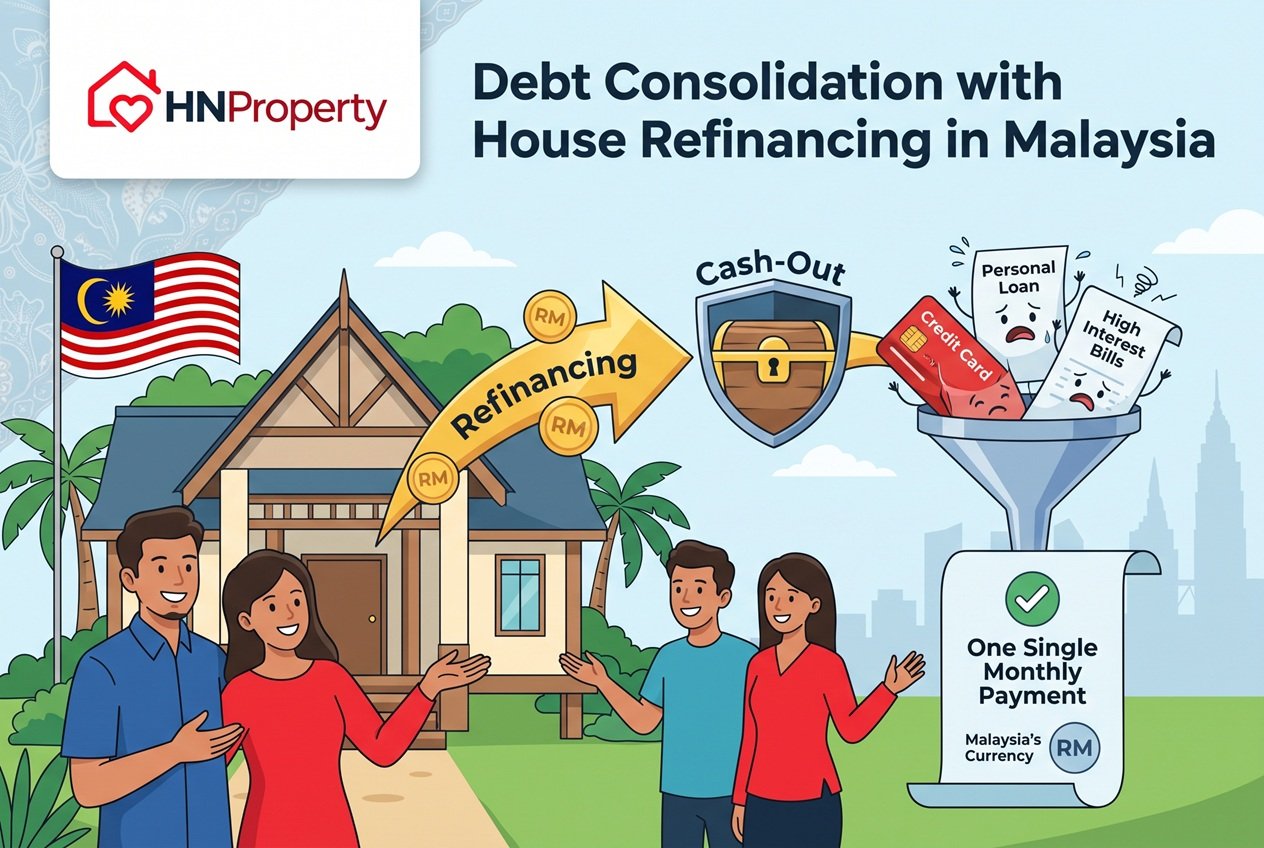
If credit-card bills, a personal loan and your home-financing instalment are all competing for attention, refinancing may let you combine some of those debts into one facility. It can simplify monthly budgeting, but it does not erase what you owe—and it puts your home behind more of that debt.
Refinancing replaces your existing home loan or financing with a new one. With a cash-out refinance, the new facility may be larger than the amount needed to settle your current home loan. If approved, the balance can be used to pay off eligible debts, such as credit-card balances or a personal loan. The amount you can borrow depends on the lender’s valuation, financing terms and assessment of your ability to repay; the equity shown by a simple property-value-minus-loan calculation is not automatically available as cash.
How refinancing can consolidate debt
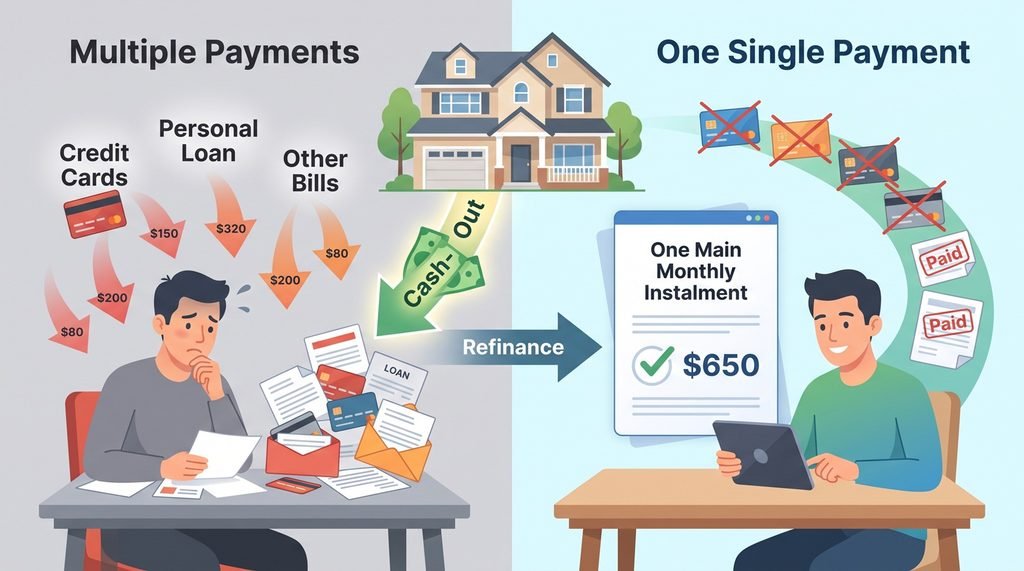
For example, an owner might refinance a home and use some approved cash-out to settle card balances and personal financing. The result could be one main instalment instead of several. Ask the bank which debts it will pay directly and which, if any, it will release to you; eligible debts and arrangements vary by product.
This is different from simply switching to a new loan with a better rate or different tenure while keeping the borrowing close to the existing balance. That is usually called rate-and-term refinancing. Debt consolidation specifically means using the new facility to bring multiple debts together.
The potential benefits—and trade-offs
One repayment can be easier to track and may lower your monthly outgoings, particularly if it replaces debts with higher rates. But a smaller monthly instalment does not necessarily mean a cheaper loan: stretching repayments over a longer period can increase the total amount paid. Refinancing also has costs to check, which may include legal, valuation or stamp-duty charges and any applicable early-settlement costs. Get the lender’s full written breakdown rather than assuming a “lower instalment” means a saving.
The key difference from consolidating with an unsecured personal facility is the security: with a home refinance, the property secures the larger facility. If you cannot keep up with repayments, your home is at risk. And if cleared credit cards are used to build up balances again, you could end up with both the enlarged home financing and fresh card debt.
Approval, costs and credit checks
A bank will assess your income, current commitments, repayment record and the property—not just its estimated value. Approval, rates, financing margin and tenure are not guaranteed. Check your CCRIS report before applying: Bank Negara Malaysia says it records financing and repayment history for the past 12 months, and borrowers can access it free through eCCRIS. It is one input into a financing assessment, not a “blacklist”.
Before accepting an offer, compare the new monthly instalment, total repayment over the full tenure, fees, rate type and any early-settlement terms against your current loans. Ask for a written settlement breakdown for each debt being consolidated, and confirm how the lender will handle settlement. If the main aim is short-term cash-flow relief, also consider whether a non-property-backed option is more appropriate: it may avoid putting the home at risk, though its terms and eligibility will differ.
A practical takeaway
Treat house refinancing as a new, secured debt—not a debt wipe-out. List each balance and repayment, check your CCRIS, confirm the remaining lease and title conditions, then compare the full cost of the new facility with what you would pay by keeping or restructuring your current debts. Consider consolidating only if the repayment remains affordable, the total cost makes sense, and you have a plan not to run the cleared debts back up.
Hafiz Noor