Freehold vs Leasehold Property in Malaysia: A Practical Guide for Buyers and Investors

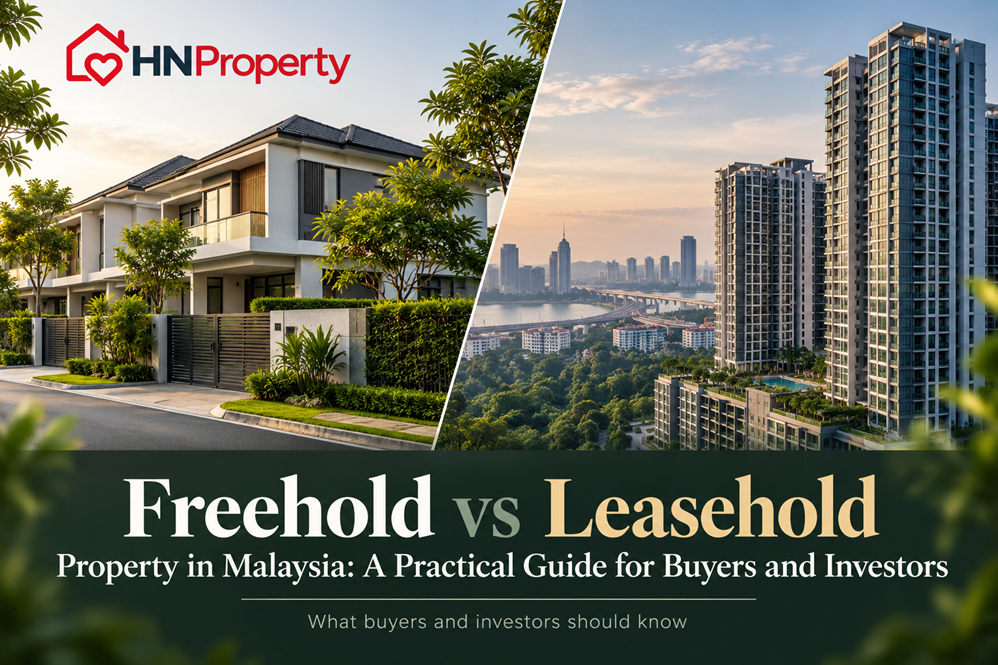
If you’re hunting for a home or investment property in Malaysia, you’ll quickly spot two labels everywhere: freehold and leasehold. They sound similar, but they affect your ownership rights, financing options, resale value and long-term peace of mind in very different ways. Here’s what you need to know—without the legal jargon.
What’s the real difference?
Freehold means you own the land and the building on it forever (in perpetuity), subject only to national laws and local planning rules. There’s no expiry date, no renewal needed and no ground rent payable to the state.
Leasehold means you own the building but lease the land from the state government for a fixed period—typically 30, 60 or 99 years. When the lease runs out, ownership of the land (and everything on it) reverts to the state unless you apply for—and pay for—a renewal.
In Johor, for example, many townships near the JB city centre are leasehold with 99-year titles (eg: Larkin, Bandar Baru Uda, Taman Nong Chik), while other housing in areas like Taman Sri Tebrau or Setia Indah often carries freehold status. Always check the individual title—some freehold properties still require state consent for transfer due to historical restrictions.
Pros and cons at a glance
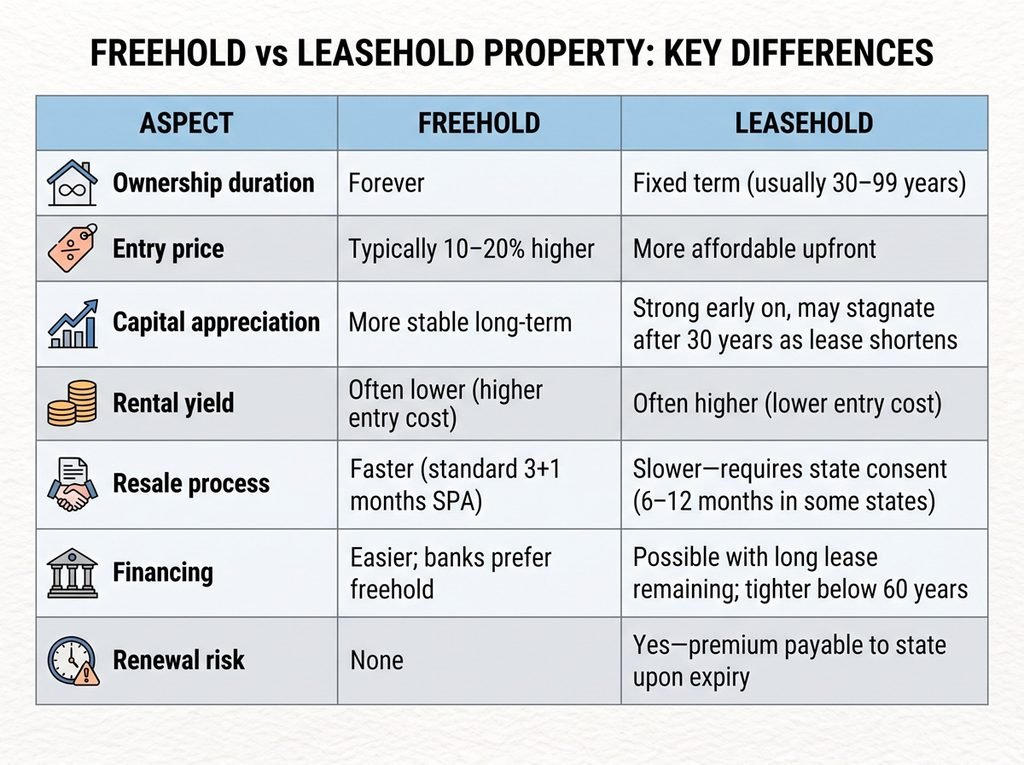
Freehold properties are generally favoured for legacy planning and long-term holding. Leasehold can be attractive for first-time buyers or investors targeting rental income, especially in fast-growing areas where location matters more than tenure.
What happens when a lease expires?
Lease expiry isn’t automatic doom—but it does require action. Before your lease runs out (ideally 2–5 years prior), you must apply to the State Land Office for renewal or extension. The state calculates a premium based on current market value, location and remaining lease term. Once paid, you’ll receive a new lease document, typically extending tenure by another 30, 60 or 99 years.
Important caveats:
- Renewal is not guaranteed—the state can reject applications if the land is needed for public purposes.
- Premiums can be substantial, sometimes approaching current market value.
- Procedures and fees vary by state; Johor’s process may differ slightly from Selangor or Penang.
Financing and resale: what banks and buyers care about
Banks treat freehold titles as lower-risk collateral. You’ll usually get:
- Higher loan-to-value ratios (up to 90%)
- Longer loan tenures (limited only by your age and bank policy)
- Faster approval times
For leasehold, lenders look closely at the remaining lease term:
- Above 60 years: Financing is generally straightforward.
- 40–60 years: Loan margins may drop; tenures shorten to fit within the lease.
- Below 30–40 years: Many banks decline outright or offer very limited financing.
Resale is similarly affected. Freehold transactions typically complete within the standard 3+1 months under the Sale and Purchase Agreement. Leasehold sales require state consent, which can add 6–12 months to the timeline—longer in busy states like Selangor and KL. Transfers from Bumi to non-Bumi owners often take even more time due to additional approvals.
Practical takeaway for Malaysian buyers
Ask yourself three questions before deciding:
- How long do I plan to hold? If you’re thinking generations, freehold offers certainty. If it’s 10–20 years for rental or capital gain, leasehold in a good location can work well.
- What’s my budget? Leasehold units are often 10–20% cheaper than comparable freehold, freeing up cash for renovation or other investments.
- What’s the remaining lease? For leasehold, always check the title. Avoid properties with less than 60 years left unless you’re prepared for tighter financing and a smaller buyer pool later.
In Johor specifically, leasehold condos near RTS Link or EduCity may offer strong rental demand now, but factor in the renewal cost 70–80 years down the line. Freehold landed homes in established neighbourhoods like Taman Daya or Horizon Hills provide stability but come at a premium.
Whichever you choose, always verify the individual title, check for any “restriction in interest” clauses, and consult a lawyer or experienced agent before signing. Tenure is just one piece of the puzzle—but it’s one you can’t ignore.
Hafiz Noor